
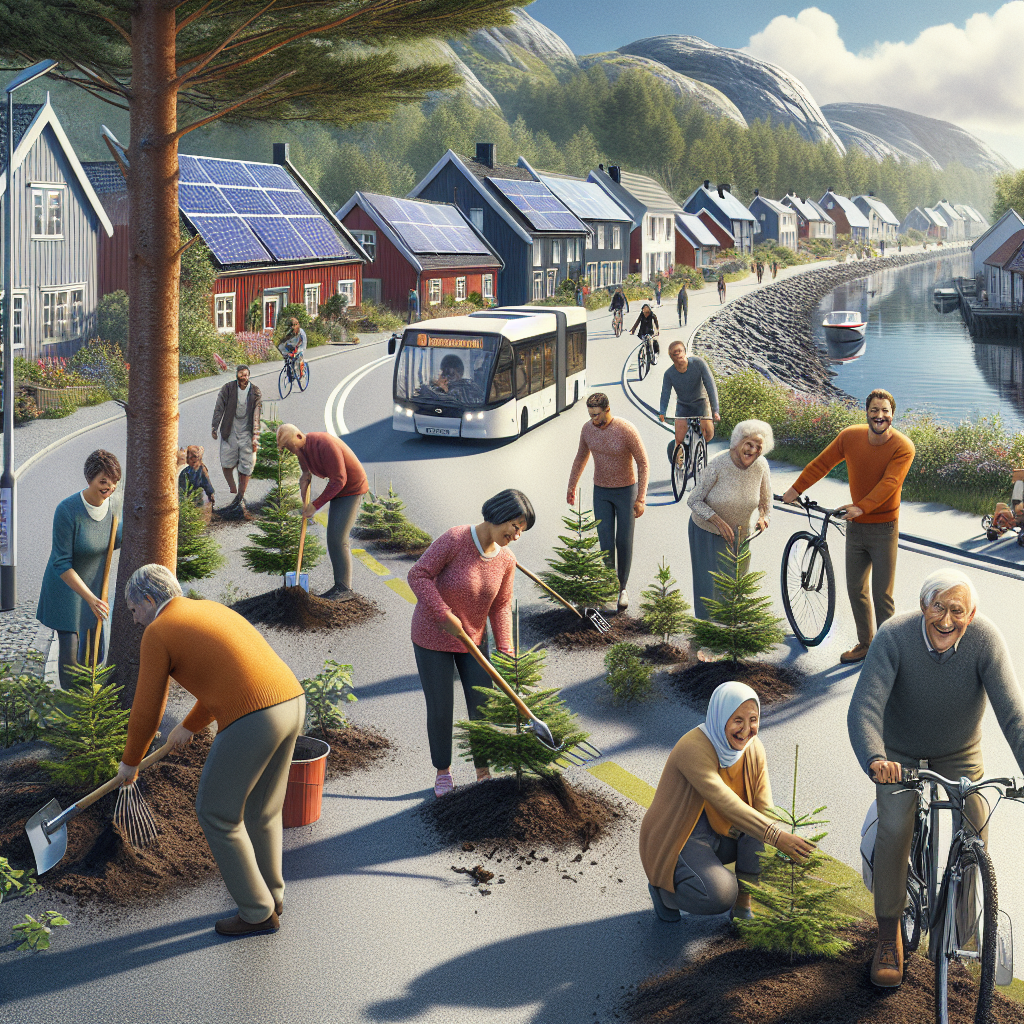
Building a Greener Norway from Neighborhoods to Cities
Norway’s natural wealth — fjords, forests and northern coastlines — shapes not only national identity but also a practical approach to sustainability. This guide synthesizes community-led strategies, municipal innovations, and practical household choices that help residents reduce footprints while strengthening local ecosystems and social resilience.
Why community action matters
Climate and biodiversity challenges are no longer distant problems; they are local issues affecting rivers, coasts and winter tourism patterns. Community involvement is a powerful complement to national policy because it:
- Mobilizes local knowledge about species, habitats and seasonal changes;
- Creates ownership of conservation measures, increasing compliance and stewardship;
- Enables rapid, low-cost interventions such as habitat restoration and litter removal;
- Links social benefits — volunteerism, education and local food networks — with ecological outcomes.
For examples of grassroots efforts and how residents organize to protect landscapes, see community-led initiatives such as Community-Led Conservation: Protecting Norway’s Nature Together. These models show how small groups can influence policy and scale local practices across municipalities.
Practical community actions that work
1. Habitat-friendly landscaping
Public spaces and private gardens can be redesigned to support pollinators and native plants. Simple steps include planting native flowering species, reducing lawn area, and creating woody debris piles as habitat for insects and small mammals.
2. Participatory shoreline restoration
Coastal communities can restore eelgrass beds and re-naturalize shorelines to increase biodiversity and protect against erosion. These are low-cost, high-impact actions that benefit fisheries and tourism.
3. Community energy and microgrids
Neighborhood-level renewable energy cooperatives — rooftop solar arrays and shared battery storage — keep energy local and reduce transmission losses. Municipalities that enable permitting and shared ownership models see higher adoption rates.
Sustainable urban mobility: from policy to everyday choices
Transport is a key area where local decisions immediately shape emissions and quality of life. Norwegian cities are experimenting with solutions that reduce private-car dependence while preserving accessibility.
- Prioritizing walking and cycling infrastructure for safe, year-round use.
- Expanding convenient, affordable public transport networks with strong first/last-mile connections.
- Integrating shared micromobility (e-scooters, cargo bikes) for short trips and deliveries.
For discussions on how technology companies and urban planners are enabling these transitions, consult resources like How Norwegian Tech Startups Are Shaping Sustainable Urban Mobility which highlight innovations bridging street design and digital services.
Financing local sustainability: practical tips
Financing community projects can be a barrier. Local savings groups, municipal grants and crowd-sourced campaigns help, but residents also need accessible, responsible financial tools and advice. For practical personal finance guidance tied to everyday eco-decisions, see this primer on card benefits and smart money habits: how to use Remember Smart: benefits and financial tips.
Education and partnerships for long-term success
Education connects citizens to science-based practice. Universities, research centers and extension services provide frameworks for evidence-based planning and monitoring. For a broad overview of environment and sustainability resources and applied research that communities can leverage, see Cornell CALS environment and sustainability.
What partnerships look like
- Municipality + local NGOs: co-funded restoration schemes and volunteer programs.
- Schools + scientists: citizen science projects that monitor biodiversity and air quality.
- Small businesses + community cooperatives: shared logistics that reduce emissions and improve resilience.
Daily actions for residents
Even small daily choices add up. Here are practical, accessible behaviors that complement community and city-level measures:
- Choose active transport for short trips and consider shared mobility services for occasional car needs.
- Prioritize energy efficiency at home: insulation, smart thermostats, and LED lighting.
- Reduce food waste and favor seasonal, locally produced foods to lower emissions associated with transport and storage.
- Support local conservation groups through time, donations, or sharing skills like carpentry for habitat projects.
Measuring progress: simple metrics communities can use
Effective programs measure outcomes. Practical metrics include:
- Area of habitat restored or native species planted.
- Mode share for walking, cycling and public transport trips.
- Reduction in household energy use per capita.
- Number of residents engaged in volunteer monitoring programs.
These indicators are actionable at local scales and help when applying for grants or presenting plans to municipality councils.
Challenges and realistic expectations
Transformations require time and iterative learning. Barriers include funding cycles, regulatory complexity, and social inertia. Successful community projects address these by building diverse coalitions, documenting lessons learned, and scaling pilot projects in phases.
Conclusion: Integrating community, technology and policy
Sustainable living in Norway is most resilient when community initiative, technological innovation and supportive policy align. Residents can lead by organizing locally, adopting low-carbon daily habits, and partnering with municipalities and research institutions to make decisions grounded in science and local knowledge. The path forward is collaborative: small actions accumulate into lasting ecological and social benefits.
Want to get involved? Start a neighborhood meeting, map local habitats, or join a municipal planning consultation — these are the practical steps that turn concern into measurable conservation and cleaner, fairer urban mobility.